Basin and Retention Pond Maintenance in New Jersey
Stormwater basins work quietly until they don’t. Then a clogged outlet floods a road, or a berm starts washing out. Eastcoast SiteWork keeps basins and ponds working for HOAs, property managers, developers, and commercial owners.
One crew for cleanup, sediment removal, and outlet repairs.
Request A Quote For Your Project
Every basin collects what runs off the ground above it. That includes sediment, leaves, trash, and pollutants from parking lots and roads. According to the EPA, sediment is a leading cause of water pollution. As it builds up, the basin holds less water and drains more slowly.
We have handled site work out of Freehold since 1999. Our crews maintain basins across Monmouth, Ocean, Middlesex, and Burlington counties.

What Our Basin Maintenance Covers
We install and maintain basins for construction sites, subdivisions, and commercial properties. Depending on the site, the work can include:
- Trash and debris removal from the basin floor, inlets, and outlets
- Sediment removal to bring back lost storage
- Low-flow channel cleanup
- Erosion repair on side slopes and berms
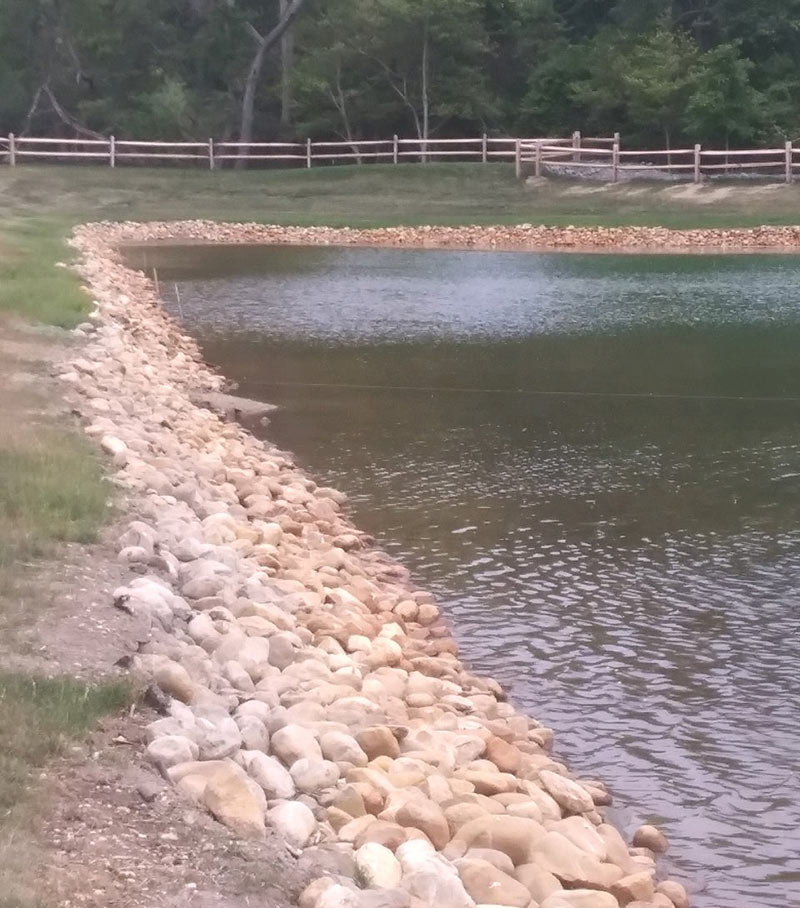
- Riprap replacement at outlets and spillways
Who Relies on Basin Maintenance
Most basins we see belong to one of three groups.
- HOAs and property managers often inherit basins once a developer turns a community over.
- Developers and general contractors need temporary sediment basins kept working until a site is stabilized.
- Commercial owners have basins
What New Jersey Requires
New Jersey’s Stormwater Management Rules address maintenance directly. For a major development, the design engineer prepares a maintenance plan for its stormwater measures. That plan names who is responsible for upkeep and repairs.
Maintenance guidance for each basin type comes from the New Jersey Stormwater Best Management Practices Manual. A neglected basin is a compliance problem for whoever owns it.
Retention Ponds vs. Detention Basins
The two terms get mixed up often. A retention pond holds a permanent pool of water. A detention basin drains dry between storms and only fills during heavy rain. Both need regular care, though the work looks different. Our guide on what a retention pond is explains the difference in more detail.
Before and After a Basin Cleanup
The photos below show a low-flow channel before and after cleanup. Once sediment and growth are cleared, water can move through the basin the way it was designed to.


Sediment Basins on Active Construction Sites
Construction sites often need a temporary sediment basin. It holds muddy runoff long enough for soil to settle before water leaves the site. Ideally, the basin is built before clearing and grading start. It then stays in place until the site is permanently stabilized.
These basins fill fast during earthwork. As a result, they need cleaning on a schedule to keep doing their job. Our crews install and maintain them alongside the silt fence and other controls on the site.
Riprap Replacement
Outlets and spillways take the hardest hits in a storm. Over time, the stone protecting them shifts, sinks, or gets buried. Once that happens, scour holes form and the berm can start to wash out. We reset and replace riprap as part of basin maintenance.
Retention Pond Before Maintenance


Retention Pond After Maintenance