Eastcoast SiteWork provides professional hydroseeding for residential lawn establishment, commercial site development, and erosion control across Monmouth, Ocean, Middlesex, Mercer, and Burlington Counties as part of our broader erosion control and construction site work services.
If you need fast, reliable turf coverage or soil stabilization that meets New Jersey DEP stormwater requirements, our team is ready to help.
What Is Hydroseeding?
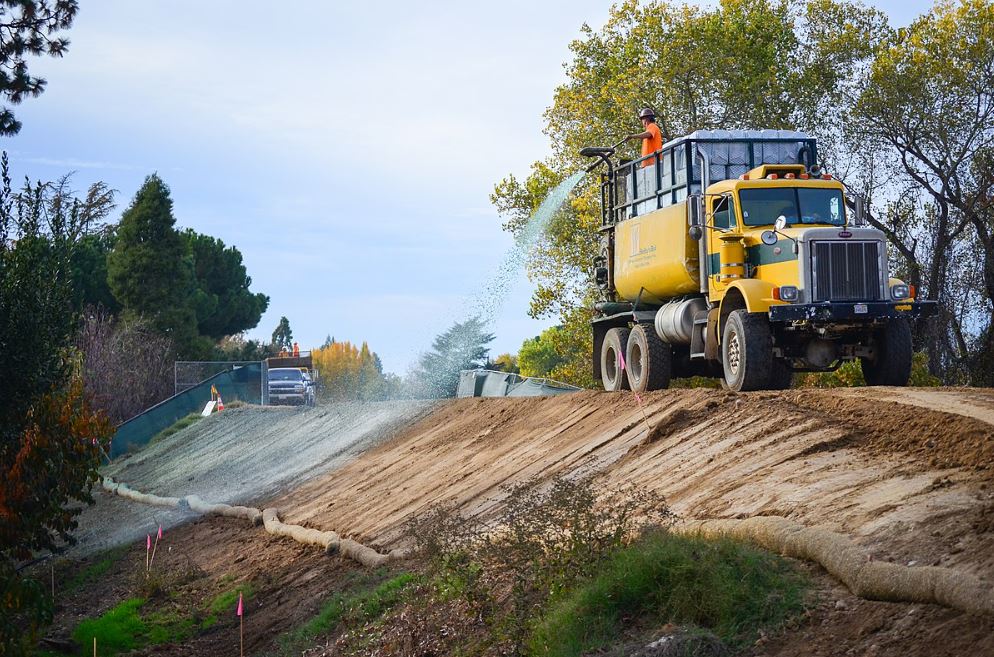
Hydroseeding — also called hydraulic mulch seeding — is a process that applies a slurry of seed, mulch, water, fertilizer, and tackifier to prepared soil using pressurized spray equipment. The mixture coats the ground in a single pass, locking seeds in place, retaining moisture at the root zone, and dramatically reducing the risk of erosion and washout.
It is one of the most cost-effective methods for establishing vegetation on large areas, steep slopes, and disturbed construction sites. For property owners comparing options, our overview of hydroseeding for lawn establishment and erosion control explains how it stacks up against traditional seeding and sod. Compared to sod, hydroseeding costs significantly less per square foot. Compared to broadcast seeding, it germinates faster and holds up far better against rain and wind.
Who Uses Hydroseeding in New Jersey?
Hydroseeding works for a wide range of projects across New Jersey:
- Homeowners establishing a new lawn after construction or regrading
- Residential builders meeting final grading and landscaping requirements before closing
- Commercial developers stabilizing graded pads and slopes before certificate of occupancy
- General contractors meeting NJDEP soil erosion and sediment control plan requirements
- Municipalities revegetating roadside embankments, retention basins, and utility corridors
- Property managers reseeding damaged or bare turf areas
How Hydroseeding Works: Step by Step
Step 1: Site Evaluation and Soil Preparation
Before any spraying begins, our technicians evaluate the site. The soil must be properly graded — sloping away from structures at a minimum drop of two inches per 100 feet — to prevent moisture from pooling near foundations and to ensure even coverage.
Where needed, soil amendments such as lime or compost are incorporated to correct pH and improve organic matter content. Poor soil preparation is the most common reason hydroseeding fails, so we take this step seriously.
Step 2: Slurry Mixing
The hydroseed mixture is prepared in a specialized tank with continuous agitation to keep all materials evenly suspended. The slurry contains:
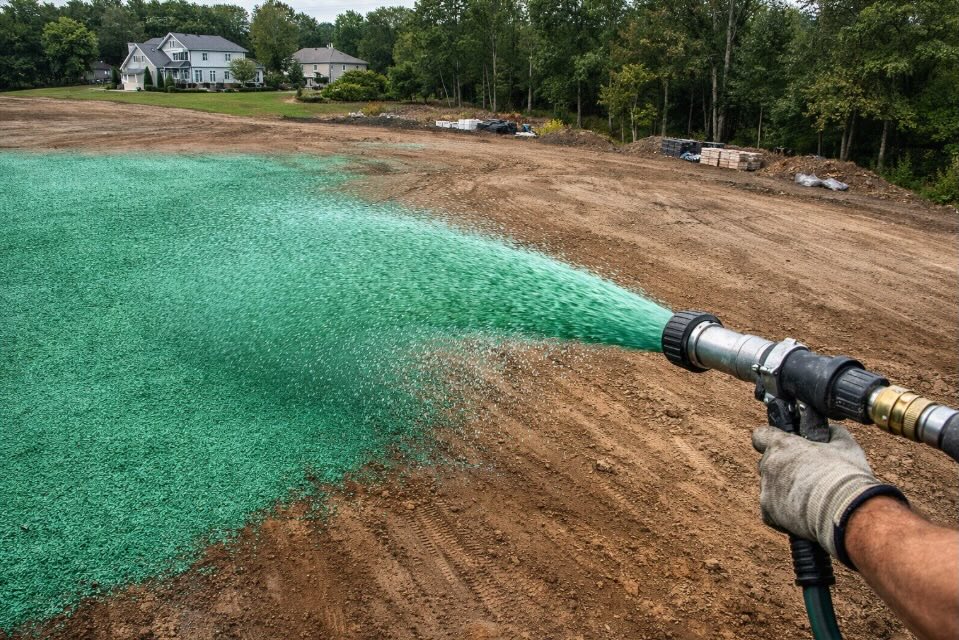
- Green dye for visible coverage confirmation during application
- Grass seed selected for the site’s sun exposure, soil type, and intended use (fine lawn, erosion control, meadow mix, etc.)
- Wood fiber or paper mulch to retain moisture and protect seeds from displacement
- Starter fertilizer to accelerate early root development
- Tackifier to bind the mixture to the soil surface
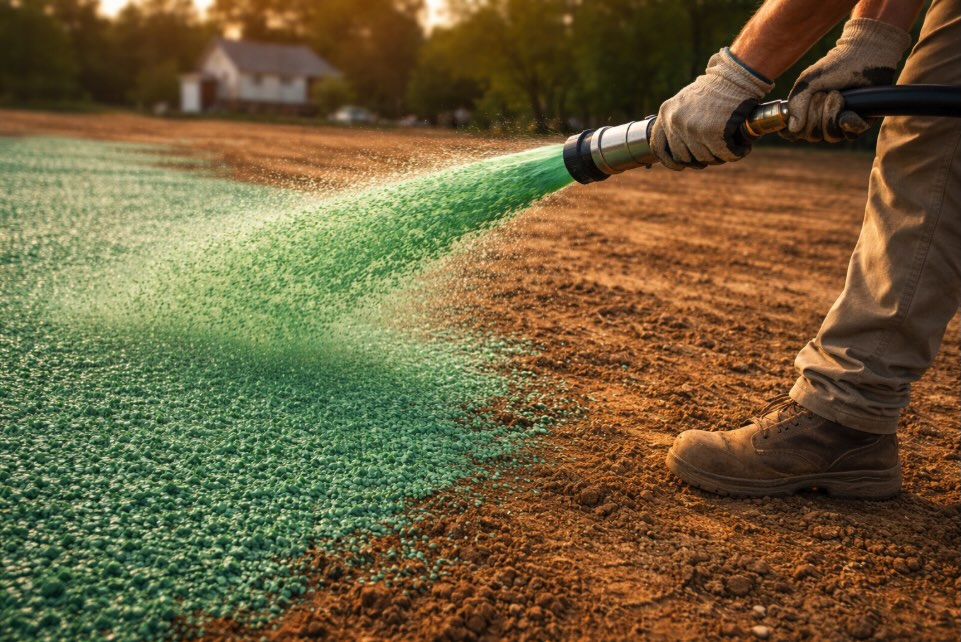
Once mixed, the slurry must be applied within approximately one hour to prevent the fertilizer and moisture from damaging seed viability.
Step 3: Application
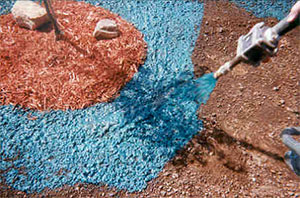
Using a hose and spray nozzle, our technician applies the slurry in a uniform, overlapping pattern. The green dye makes it easy to identify any missed areas and ensure consistent coverage across the entire site.
After application, we post signage and temporary barriers to protect new growth from foot traffic and equipment disturbance.
Hydroseeding for Erosion Control and NJDEP Compliance
Hydroseeding plays a critical role in New Jersey construction site compliance. Under NJDEP stormwater and soil erosion regulations, disturbed soil must be stabilized within defined timeframes after grading. Hydroseeding is one of the fastest, most widely accepted methods for achieving that stabilization.
Eastcoast SiteWork regularly coordinates with project managers and site superintendents to schedule hydroseeding during stabilization windows — including before municipal inspections and final site walks — drawing on our broader experience in construction site preparation and maintenance services. Our services are frequently combined with:
- Silt fence installation
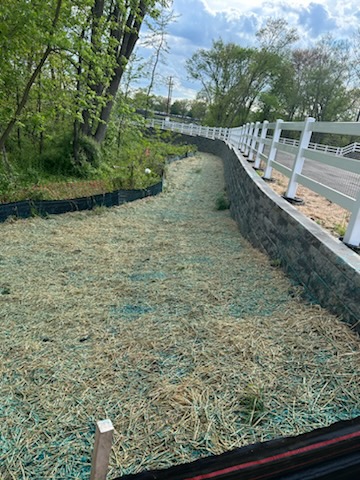
- Erosion control blankets (ECBs) on steep slopes
- Inlet protection devices
- Straw wattles and sediment barriers
Together, these measures create a complete soil erosion and sediment control system that meets the requirements of New Jersey’s Soil Conservation Districts.
Aftercare: How to Maintain Hydroseeded Areas
The first three weeks after hydroseeding are critical. Follow these guidelines to protect your investment:
Watering: Keep the mulch layer consistently moist. Light, frequent watering — two to three times per day for the first two to three weeks — encourages germination without causing puddling or runoff. After the first few weeks, transition to deeper, less frequent watering as root systems strengthen.
Fertilizing: Apply a starter fertilizer approximately two weeks after hydroseeding to support turf density.
Mowing: Most hydroseeded lawns are ready for their first cut at three to four weeks, once grass reaches three to four inches in height. Use a push mower set to leave at least three inches of blade height. Avoid heavy equipment — it can tear up new roots before they anchor properly.
Reseeding: Thin or patchy areas can be spot-reseeded for a seamless finish. This is common in shadier or drier zones and does not indicate a problem with the initial application.
How Long Does Hydroseeded Grass Take to Grow?
Under typical New Jersey conditions:
- 5 to 7 days: First signs of germination become visible
- 2 weeks: Noticeable green coverage across most of the treated area
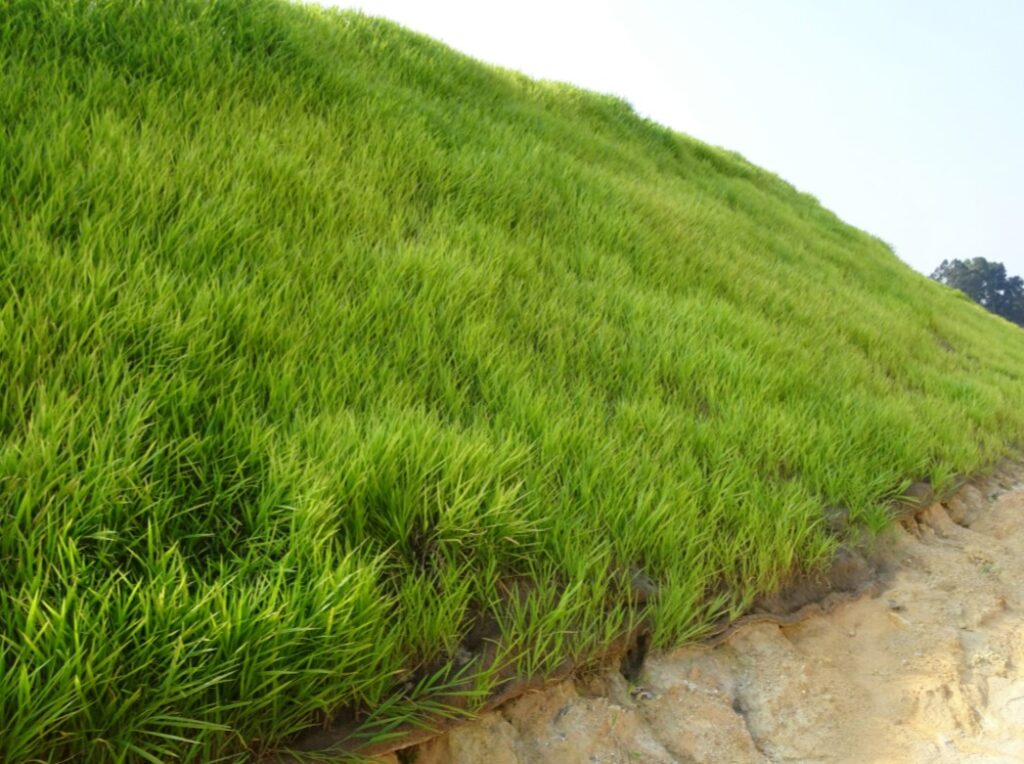
- 5 to 6 weeks: Full turf density and coverage achieved
Growth rate depends on soil temperature, seed mix, watering consistency, and weather. Fall and spring applications tend to perform best in New Jersey’s climate.
Hydroseeding vs. Sod vs. Broadcast Seeding
| Hydroseeding | Sod | Broadcast Seeding | |
|---|---|---|---|
| Cost | Low–Moderate | High | Low |
| Time to coverage | 2–6 weeks | Immediate | 4–8 weeks |
| Slope performance | Excellent | Good | Poor |
| Root depth | Deep | Moderate | Variable |
| Large area efficiency | Excellent | Moderate | Good |
| NJDEP compliance | Yes | Yes | Limited |
When to Hydroseed in New Jersey
The best times to hydroseed in New Jersey are early spring (April through May) and early fall (late August through October). During these windows, soil temperatures are optimal for germination, and seasonal rainfall reduces the watering burden on newly seeded areas.
Summer hydroseeding is possible but requires more intensive irrigation to compensate for heat and evaporation. Winter applications are generally not recommended for lawn establishment, though erosion control applications can occur year-round on active construction sites to meet compliance requirements.
Frequently Asked Questions About Hydroseeding in New Jersey
Hydroseeding is priced per square foot and varies based on site size, slope, accessibility, and the seed mix required. It is generally 50 to 70 percent less expensive than sod. Contact us at 732-370-0291 for a project-specific quote.
Yes. Hydroseeding with a tackifier and fiber mulch is one of the most effective ways to establish vegetation on steep slopes. For extreme grades, we may recommend an erosion control blanket in combination with hydroseeding.
Absolutely. Hydroseeding is particularly well-suited to large sites because equipment can cover significant area quickly. We regularly service commercial developments, infrastructure projects, and municipal properties throughout New Jersey.
Yes. The slurry consists of natural materials — seed, organic mulch, water, and biodegradable tackifiers — with no harmful chemicals. It is approved for use near stormwater basins, wetland buffers, and sensitive areas.
We can typically mobilize within a few days of soil preparation being complete. For time-sensitive projects, contact us early in the grading phase so we can coordinate scheduling.
Hydroseeding Service Areas in New Jersey
Eastcoast SiteWork serves contractors, developers, and homeowners throughout Central and South New Jersey. Our primary service counties include:
- Monmouth County — Freehold, Middletown, Howell, Tinton Falls, Marlboro, Manalapan, Aberdeen, Holmdel, Colts Neck, Wall Township, and surrounding areas. We work regularly with residential builders and Monmouth County Soil Conservation District requirements.
- Ocean County — Toms River, Jackson, Brick, Barnegat, Lacey Township, Stafford, Manchester, and surrounding communities. Coastal and Pine Barrens-adjacent sites often require specialized seed mixes, which our team selects on a site-by-site basis.
- Middlesex County — Edison, Old Bridge, New Brunswick, South Brunswick, Woodbridge, Sayreville, Monroe Township, and surrounding municipalities. We frequently support large infrastructure and mixed-use redevelopment projects in this county as part of our full range of construction site work and maintenance services.
- Mercer County — Hamilton Township, Lawrence Township, Ewing, Trenton, Princeton, and Robbinsville. Industrial parks, schools, and commercial developments in Mercer County benefit from our erosion control and seeding programs.
- Burlington County — Mount Laurel, Moorestown, Evesham, Medford, Lumberton, Florence, and surrounding areas. We partner with developers and municipalities on large-scale turf restoration, stormwater compliance, and green space establishment.
Don’t see your town listed? We serve projects throughout the region. Call us to confirm coverage for your site.
Get a Hydroseeding Quote
Ready to move forward? Contact Eastcoast SiteWork to discuss your project. Whether you’re establishing a new residential lawn, stabilizing a construction site, or looking to meet NJDEP soil erosion requirements, our team will assess your property, recommend the right seed mix and application method, and provide a clear, competitive quote.