Eastcoast SiteWork provides professional hydroseeding for residential lawn establishment, commercial site development, and erosion control across Monmouth, Ocean, Middlesex, Mercer, and Burlington Counties as part of our broader erosion control and construction site services.
If you need fast, reliable turf coverage or soil stabilization that meets New Jersey DEP stormwater requirements, our team is ready to help.


What Is Hydroseeding?
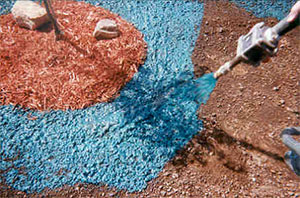
Hydroseeding — also called hydraulic mulch seeding — is a process that applies a slurry of seed, mulch, water, fertilizer, and tackifier to prepared soil using pressurized spray equipment. The mixture coats the ground in a single pass, locking seeds in place, retaining moisture at the root zone, and dramatically reducing the risk of erosion and washout.
It is one of the most cost-effective methods for establishing vegetation on large areas, steep slopes, and disturbed construction sites. For property owners comparing options, our overview of hydroseeding for lawn establishment and erosion control explains how it stacks up against traditional seeding and sod. Compared to sod, hydroseeding costs significantly less per square foot. Compared to broadcast seeding, it germinates faster and holds up far better against rain and wind.
Hydroseeding for Erosion Control and NJDEP Compliance
Hydroseeding plays a critical role in New Jersey construction site compliance. Disturbed soil must be stabilized within defined timeframes after grading. Learn more about these state requirements from the Ocean County Soil Conservation District. Hydroseeding is one of the fastest, most widely accepted methods for achieving that stabilization.
Eastcoast SiteWork regularly coordinates with project managers and site superintendents to schedule hydroseeding during stabilization windows — including before municipal inspections and final site walks — drawing on our broader experience in construction site preparation and maintenance services. Our services are frequently combined with:
- Silt fence installation
- Erosion control blankets (ECBs) on steep slopes
- Inlet protection devices
- Straw wattles and sediment barriers
Together, these measures create a complete soil erosion and sediment control system that meets the requirements of New Jersey’s Soil Conservation Districts.
How to Maintain Hydroseeded Areas
The first three weeks after hydroseeding are critical. Follow these guidelines to protect your investment:
Watering: Keep the mulch layer consistently moist. Light, frequent watering — two to three times per day for the first two to three weeks — encourages germination without causing puddling or runoff. After the first few weeks, transition to deeper, less frequent watering as root systems strengthen.
Fertilizing: Apply a starter fertilizer approximately two weeks after hydroseeding to support turf density.
Mowing: Most hydroseeded lawns are ready for their first cut at three to four weeks, once grass reaches three to four inches in height. Use a push mower set to leave at least three inches of blade height. Avoid heavy equipment — it can tear up new roots before they anchor properly.
Reseeding: Thin or patchy areas can be spot-reseeded for a seamless finish. This is common in shadier or drier zones and does not indicate a problem with the initial application.
How Long Does Hydroseeded Grass Take to Grow?
Under typical New Jersey conditions:
- 5 to 7 days: First signs of germination become visible
- 2 weeks: Noticeable green coverage across most of the treated area
- 5 to 6 weeks: Full turf density and coverage achieved
Growth rate depends on soil temperature, seed mix, watering consistency, and weather. Fall and spring applications tend to perform best in New Jersey’s climate.
Hydroseeding vs. Sod vs. Broadcast Seeding
| Hydroseeding | Sod | Broadcast Seeding | |
|---|---|---|---|
| Cost | Low–Moderate | High | Low |
| Time to coverage | 2–6 weeks | Immediate | 4–8 weeks |
| Slope performance | Excellent | Good | Poor |
| Root depth | Deep | Moderate | Variable |
| Large area efficiency | Excellent | Moderate | Good |
| NJDEP compliance | Yes | Yes | Limited |
When to Hydroseed in New Jersey
The best times to hydroseed in New Jersey are early spring (April through May) and early fall (late August through October). During these windows, soil temperatures are optimal for germination, and seasonal rainfall reduces the watering burden on newly seeded areas.
Summer hydroseeding is possible but requires more intensive irrigation to compensate for heat and evaporation. Winter applications are generally not recommended for lawn establishment, though erosion control applications can occur year-round on active construction sites to meet compliance requirements.
Get a Hydroseeding Quote
Ready to move forward? Contact Eastcoast SiteWork to discuss your project. If you’re establishing a new residential lawn, stabilizing a construction site, or looking to meet NJDEP soil erosion requirements, our team will assess your property, recommend the right seed mix and application method, and provide a clear, competitive quote.